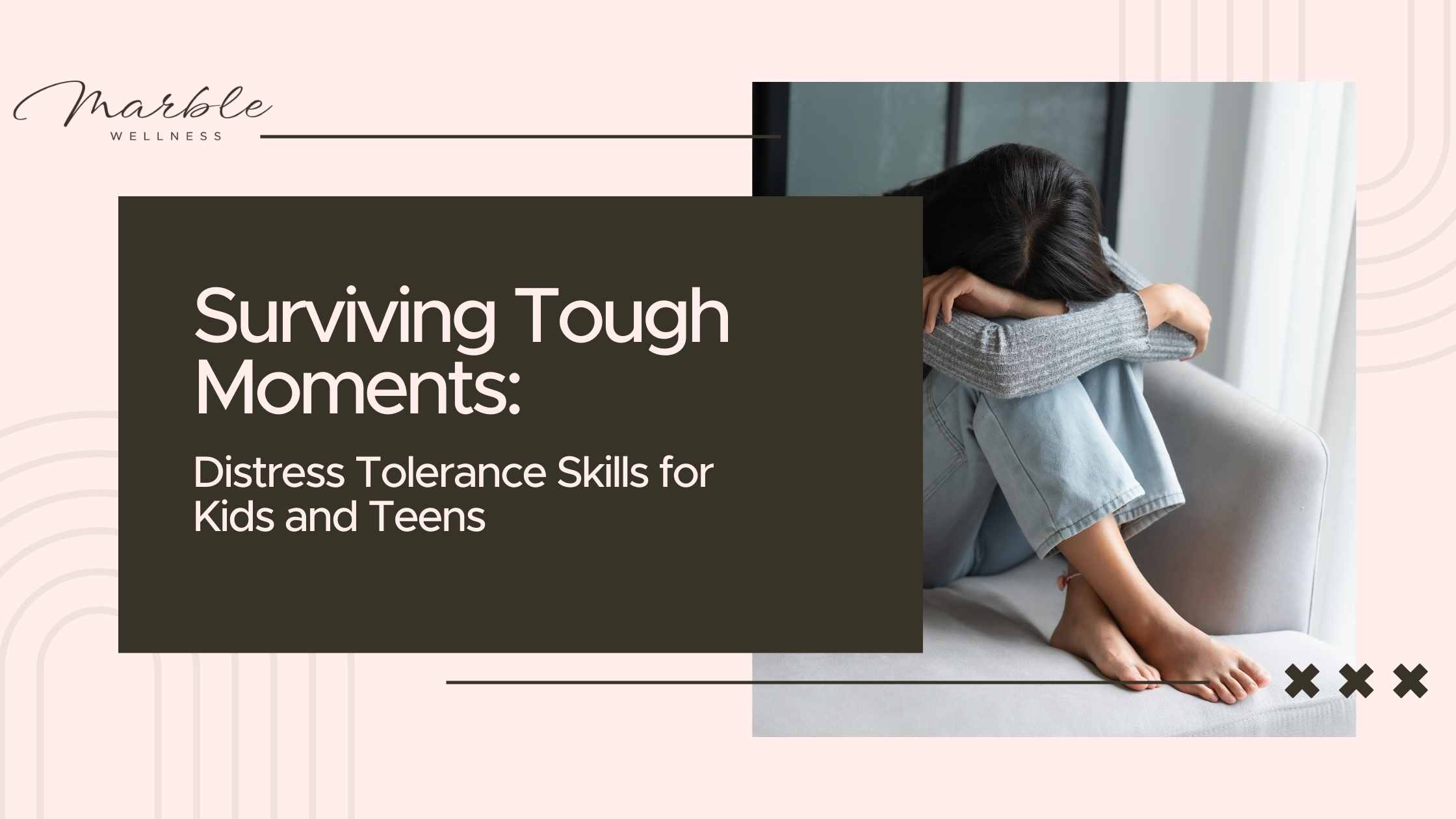
Every family faces moments when emotions run high, and your child or teen feels overwhelmed by stress, anxiety, or frustration. Whether it’s anxiety about a test, disappointment over a missed opportunity, or difficult social situations, those tough moments can trigger big feelings and impulsive reactions. Dialectical Behavior Therapy (DBT) offers a powerful set of distress tolerance skills to help kids and teens get through these moments safely and calmly—without making things worse.
What Is Distress Tolerance?
Distress tolerance is the ability to endure painful or uncomfortable emotions without trying to immediately fix or escape them. It’s about “riding the wave” of difficult feelings until they naturally pass. For children and teens, learning these skills reduces the chance of impulsive reactions like outbursts or avoidance, and supports healthier coping.
Think of distress tolerance as emotional survival skills. When your child can tolerate distress, they build resilience by understanding that emotions come and go—they don’t have to control their actions in those moments.
Practical Distress Tolerance Skills to Teach Your Child
DBT offers a toolbox of simple, effective strategies that kids and teens can use right away. Here are some easy-to-understand examples:
- Radical Acceptance: Teaching acceptance of situations that can’t be changed helps your child stop fighting reality and conserve energy for coping and problem-solving later.
- STOP Skill: Stop, Take a step back, Observe what’s happening, and Proceed mindfully. This simple pause helps interrupt impulsive reactions.
- Grounding with the 5-4-3-2-1 Exercise: Naming 5 things you see, 4 you feel, 3 you hear, 2 you smell, and 1 you taste. This sensory focus pulls your child into the present moment and away from overwhelming thoughts.
- TIPP Techniques: These are quick ways to lower emotional intensity using
- Temperature (hold cold water or splash cold water on the face)
- Intense exercise (short bursts of movement like jumping jacks)
- Paced breathing (slow, deep breaths)
- Progressive muscle relaxation (tightening and releasing muscles)
- Distraction and Self-Soothing: Activities like listening to calming music, drawing, or holding a soft toy engage the senses and emotions constructively without avoiding feelings.
Why Practicing Distress Tolerance Matters
When distress tolerance skills become part of your child’s toolkit, they gain confidence in facing tough emotions instead of fearing or escaping them. This leads to:
- Reduced emotional outbursts and impulsive behavior
- Greater ability to stay calm in stressful situations
- Increased problem-solving without panic or shutdown
- Better relationships with family, friends, and teachers
Supporting Distress Tolerance at Home
Parents can encourage these skills by modeling calm responses in stressful moments, practicing grounding exercises together, and reminding a child to use their tools instead of reacting impulsively. Creating a calm, validating home environment helps reinforce your child’s ability to tolerate distress.
Distress tolerance is a vital part of DBT therapy and a gift your child or teen can carry through life. Marble Wellness therapists guide families in learning and practicing these skills in therapy sessions, making them approachable, fun, and effective for all ages.
Stay tuned for the next blog post, where we’ll explore Emotion Regulation—the DBT pillar that helps kids and teens understand and manage their emotions thoughtfully and effectively.
Start DBT Therapy in the St. Louis Area
If you live in the St. Louis metro area and are ready to improve your mental health, our expert St. Louis therapists are here to help. Reach out to our Client Care Coordinator today to discuss your therapy options, both in-person and via online therapy in Missouri.
Contact Us!
Learn About Our Group Offerings

About Our St. Louis Area Therapists
The St. Louis area therapists at Marble Wellness are licensed mental health professionals serving clients in Ballwin, Lake St. Louis, and throughout the greater STL area, with online therapy in Missouri available across the state. Each member of our expert therapist team brings advanced training and extensive experience in areas like anxiety, depression, trauma, grief, life transitions, and relationship concerns.
When you reach out, you are matched with a therapist whose background, specialties, and style align with your goals so you can have both practical tools for right now and deeper insight for long-term change. To learn more about the therapists at Marble Wellness, visit our Meet Our Team page to read individual bios, specialties, and locations, and to take the next step toward the calmer, more fulfilling life you’ve been wanting.
Additional Counseling Services at Marble Wellness in St. Louis, MO
Marble Wellness Counseling services are designed to help set you on a path of living a more fulfilled, calm, and happy life. Our St. Louis area therapists have a variety of training backgrounds and areas of expertise. We have child and play therapists, therapists for teens, EMDR therapists, men’s mental health experts, couples therapists, and more! We specialize in anxiety, depression, grief, chronic illness, trauma & PTSD, life transitions, and maternal overwhelm. Our practice also specifically helps new moms with various postpartum concerns, moms in the thick of parenting, and moms with teens. We can also chat from wherever you are in the state with online therapy in Missouri. No matter where you are in your journey, we are here to help you thrive!