Teen years can be tough. Between school, sports, friendships, family expectations, and social media, many teens feel pressure from every direction. For some, that pressure comes from obvious bullying. For others, it shows up more quietly through peer pressure, exclusion, teasing, gossip, or the fear of not fitting in.
If you are a parent of a teenager, you may notice that your teen seems more withdrawn, irritable, anxious, or unsure of themselves. If you are a teen, you may feel like everyone else has it figured out while you are just trying to get through the day. Either way, these experiences can take a real toll on teen mental health.
The good news is that teens can learn coping skills that help them handle bullying and peer pressure with more confidence. They may not be able to control how other people act, but they can build tools that protect their self-worth, support their boundaries, and help them thrive.
Why bullying and peer pressure feel so hard
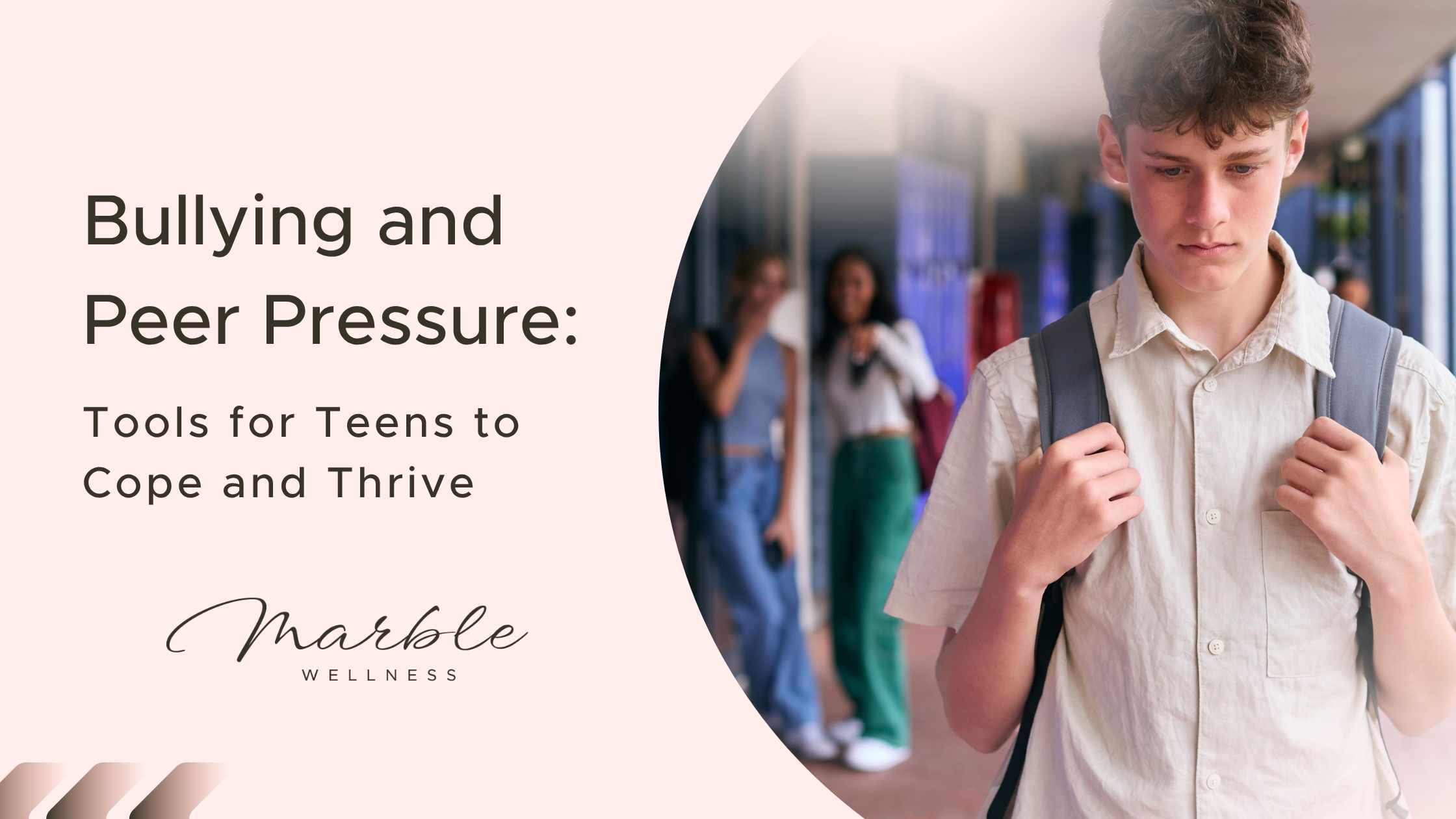
The bullying teens face these days often goes beyond one mean comment or one bad day. It can be repeated, subtle, and deeply personal. It may happen in the hallway, on a team, in a group chat, or online. Sometimes it is direct. Sometimes it is hidden behind jokes, sarcasm, or social exclusion.
Peer pressure can be just as powerful. Teens may feel pushed to act a certain way, dress a certain way, drink, vape, lie, or ignore their own values just to stay included. Because belonging matters so much during adolescence, it can be hard to speak up or walk away.
Teens are still learning how to manage strong emotions, social conflict, and identity questions. That means bullying and peer pressure can feel overwhelming, especially if a teen already struggles with anxiety, low self-esteem, or depression.
Signs a teen may be struggling
Some teens talk openly when they are having a hard time. Others keep it all inside. Parents and caregivers often notice the changes first.
Common signs may include:
- Not wanting to go to school or activities.
- Seeming sad, angry, or more sensitive than usual.
- Withdrawing from friends or family.
- Complaining about stomachaches or headaches.
- Changes in sleep, appetite, or motivation.
- A drop in grades or focus.
- Losing confidence or talking negatively about themselves.
- Becoming secretive about phone use or friendships.
These signs do not always mean bullying is happening, but they are worth paying attention to. Teen mental health often shows stress in everyday behavior before it shows up in words.
What teens need to know about peer pressure
Peer pressure is not always loud or obvious. It is not always someone saying, “Do this or else.” Sometimes it sounds more like:
- “Everyone else is doing it.”
- “Don’t be lame.”
- “If you were really my friend, you would.”
- “You’re overreacting.”
- “It’s no big deal.”
The problem is that peer pressure can make teens question their own judgment. They may agree to something they do not want to do just to avoid being left out.
A helpful reminder for teens is this:
Discomfort is not the same as danger, but it is often a sign that something does not fit your values. That feeling deserves attention.
Coping skills for teen mental health
One of the best ways to help teens handle bullying and peer pressure is to give them practical coping skills they can actually use in the moment. The goal is not to make every difficult situation disappear. The goal is to help teens respond in ways that keep them safe, grounded, and confident.
Here are some helpful coping skills teen mental health experts often encourage:
1. Practice simple, firm responses
Teens do not need a perfect speech. Short responses are often best.
Examples include:
- “No thanks.”
- “I’m not into that.”
- “I have other plans.”
- “That’s not for me.”
- “I’m good.”
If a teen tends to freeze under pressure, rehearsing a few phrases ahead of time can make it easier to speak up later.
2. Use the exit plan
If a situation feels unsafe or too uncomfortable, it is okay to leave. Teens can plan ahead for a ride, a code word, or a reason to step away.
Examples:
- “My mom needs me home.”
- “I have early practice.”
- “I’m going to check in with someone.”
- “I need a break.”
Sometimes the strongest move is simply getting out of the moment.
3. Stay connected to safe people
Bullying can make a teen feel isolated, but healing happens faster when they have support. Encourage your teen to identify a few trusted people they can talk to, such as:
- A parent or caregiver.
- A school counselor.
- A coach or teacher.
- A therapist.
- One or two steady friends.
Teens do not need a huge support system. They need a reliable one.
4. Challenge the story bullying creates
Bullying often sounds convincing because it attacks identity. A teen may start to believe, “Maybe I really am weird,” or “Maybe nobody likes me.”
Help them separate someone else’s behavior from the truth.
For example:
- “One person’s opinion is not the whole truth.”
- “Being targeted does not mean you deserve it.”
- “Mean behavior says more about them than about you.”
This kind of self-talk can support confidence and reduce shame.
5. Keep the body calm
When teens are overwhelmed, their bodies often react before their minds can catch up. Grounding skills can help them stay more regulated.
Try:
- Slow breathing.
- A quick walk.
- Holding something cold.
- Naming five things they can see.
- Listening to music on the way home.
- Taking a break from the situation before reacting.
These tools do not erase pain, but they help teens think more clearly.
What parents can do to help protect teens:
Parents often want to protect their teens, but it can be hard to know where to start. The most helpful first step is usually to listen without rushing to solve the problem.
Try saying:
- “That sounds really hard.”
- “I’m glad you told me.”
- “You do not have to handle this alone.”
- “Do you want advice, or do you want me to just listen?”
That last question is especially useful. Sometimes teens want solutions. Sometimes they just want to feel understood.
If bullying is happening at school, document what is going on and connect with the right adults. If peer pressure is leading to risky behavior, focus on curiosity instead of punishment. Ask what feels hard about saying no. Ask what they are afraid will happen. Those answers can help you support them more effectively.
When to get extra help for your teen
If your teen seems stuck in anxiety, sadness, withdrawal, anger, or self-blame, therapy may help. This is especially important if the bullying teens experience is affecting sleep, school, friendships, or self-esteem.
A therapist can help teens build coping skills, practice communication, and strengthen confidence in a safe setting. They can also help teens work through the emotional impact of rejection, embarrassment, or social stress.
At Marble Wellness, our therapists often see that teens feel relieved when they have a place to talk honestly about what is happening. They do not have to explain everything perfectly. They just need a space where they can be supported.
Helping teens thrive
Bullying and peer pressure can make teens feel powerless. But with the right support, they can learn that they have choices. They can learn how to protect their values, speak up when needed, and step away from harmful situations. They can also learn that asking for help is not a weakness. It is a strength.
Start Therapy for Teens in the St. Louis Area
Your teen does not need to be fearless to cope well. They just need tools, practice, and support. Over time, those coping skills can make a real difference in teen mental health and confidence.
If you live in the St. Louis metro area and are ready to improve your mental health, our expert St. Louis therapists are here to help. Not only do we have a team of therapists in Ballwin, MO, but we have also recently expanded to serve the Lake St. Louis and Wentzville area! Reach out to our Client Care Coordinator today to discuss your therapy options, both in-person and via online therapy in Missouri.
Contact Us!
Learn About Our Group Offerings

About Our St. Louis Area Therapists
The St. Louis area therapists at Marble Wellness are licensed mental health professionals serving clients in Ballwin, Lake St. Louis, and throughout the greater STL area, with online therapy in Missouri available across the state. Each member of our expert therapist team brings advanced training and extensive experience in areas like anxiety, depression, trauma, grief, life transitions, and relationship concerns.
When you reach out, you are matched with a therapist whose background, specialties, and style align with your goals so you can have both practical tools for right now and deeper insight for long-term change. To learn more about the therapists at Marble Wellness, visit our Meet Our Team page to read individual bios, specialties, and locations, and to take the next step toward the calmer, more fulfilling life you’ve been wanting.
Additional Counseling Services at Marble Wellness in St. Louis, MO
Marble Wellness Counseling services are designed to help set you on a path of living a more fulfilled, calm, and happy life. Our St. Louis area therapists have a variety of training backgrounds and areas of expertise. We have child and play therapists, therapists for teens, EMDR therapists, men’s mental health experts, couples therapists, and more! We specialize in anxiety, depression, grief, chronic illness, trauma & PTSD, life transitions, and maternal overwhelm. Our practice also specifically helps new moms with various postpartum concerns, moms in the thick of parenting, and moms with teens. We can also chat from wherever you are in the state with online therapy in Missouri. No matter where you are in your journey, we are here to help you thrive!