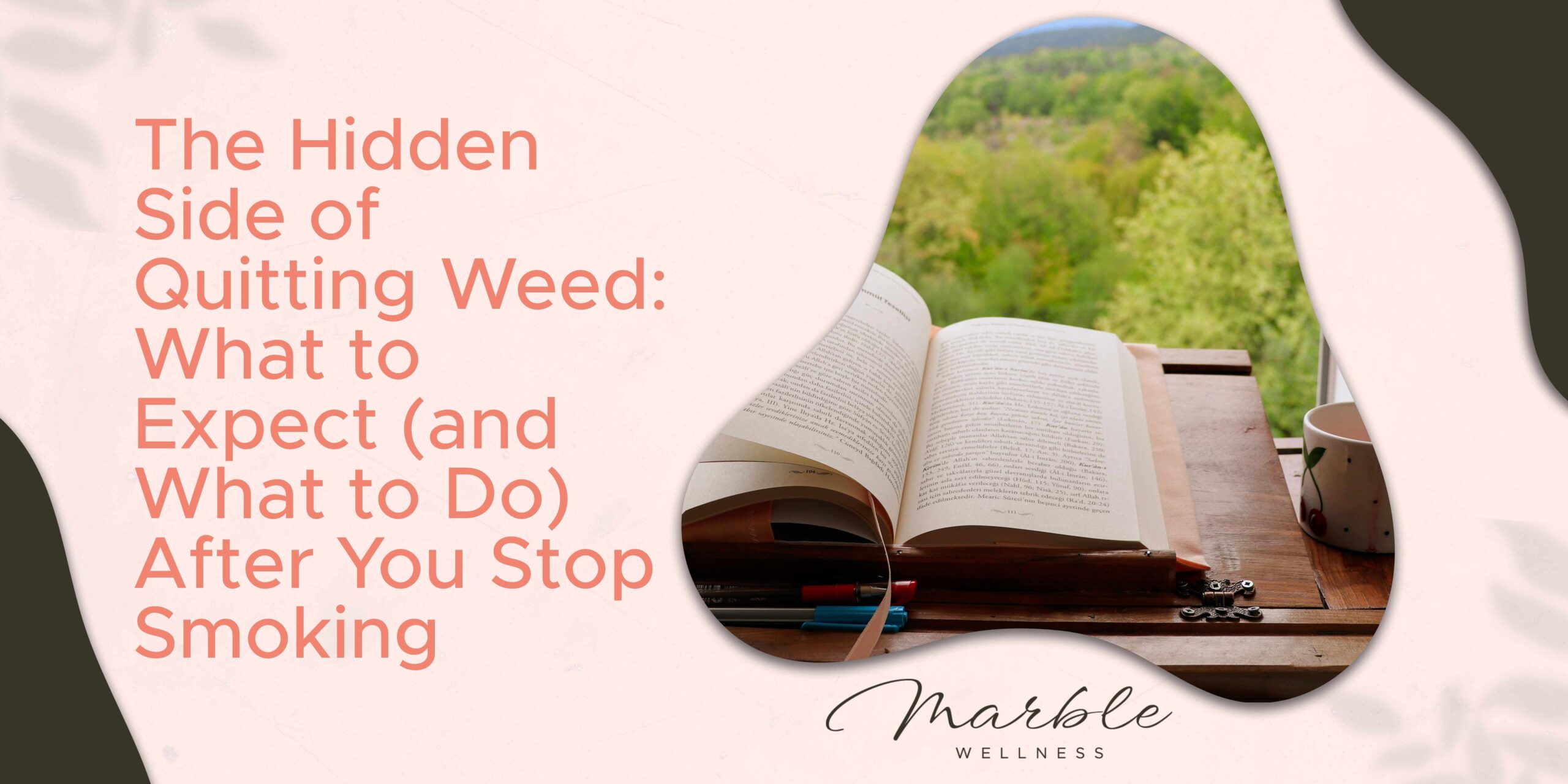
You’ve made the decision to quit smoking weed — whether to gain clarity, boost motivation, or feel more like yourself again. That’s a big, brave step toward self-awareness.
But what happens after you stop? Many people expect relief right away, yet find themselves surprised by what comes next: anxiety, irritability, restlessness, or sleepless nights.
These experiences can feel confusing — even discouraging — especially if quitting was meant to make you feel better. The reality is that your mind and body are adjusting in real time, and that takes patience and care.
At Marble Wellness, we help clients understand that this phase is not a setback — it’s part of the healing process.
The Early Days: Understanding Marijuana Withdrawal Symptoms
While cannabis is often described as “mild” compared to other substances, stopping regular or long-term use still affects the brain and nervous system. The most common withdrawal symptoms include:
- Anxiety or irritability — your brain temporarily loses its main calming signal, leading to heightened alertness.
- Insomnia or vivid dreams — your sleep cycle resets, and REM rebound (more intense dream activity) is common.
- Mood swings or sadness — dopamine levels drop as your brain recalibrates to function without THC.
- Decreased appetite or restlessness — your body adjusts to changes in hunger signaling and energy balance.
These symptoms typically peak within the first week and gradually improve over two to four weeks, depending on how frequently and how long you used. For some, mild symptoms can linger for several months — especially related to sleep and emotional balance.
It’s important to note: these experiences are temporary. They’re your body’s way of finding its natural rhythm again.
Why These Symptoms of Quitting Weed Are Normal
To understand why quitting feels so uncomfortable, it helps to consider what cannabis does in the brain. THC interacts with the body’s endocannabinoid system — the network that helps regulate stress, mood, sleep, and reward. Over time, your brain expects THC to help keep these systems in balance.
When you stop using it, your body suddenly has to re-learn how to regulate on its own. Think of it like removing training wheels after years of relying on them. You can ride the bike — it just takes practice and wobbling for a little while.
That adjustment can trigger both physical and emotional discomfort, but it also signals that healing is in motion. Your body is working exactly as it should.
Emotional Adjustment: How Therapy Can Help When Quitting Weed
Beyond physical withdrawal, many people discover an unexpected emotional layer of quitting. Weed often acts as a buffer — numbing stress, boredom, or difficult feelings. Once it’s gone, those emotions can surface in full force.
Therapy provides a safe space to process what comes up without judgment. At Marble Wellness, our caring therapists often help clients:
- Identify the emotions or stressors that cannabis once helped manage.
- Learn new coping tools for anxiety, boredom, or frustration.
- Rebuild self-trust and emotional resilience.
- Create a plan for relapse prevention that feels realistic, not rigid.
This is the stage where emotional awareness becomes your greatest strength. Therapy doesn’t just help you quit; it helps you stay well — aligned with your values and ready to handle life’s ups and downs without falling back on old habits.
Supporting Your Nervous System in Early Recovery
Your nervous system plays a key role in post-cannabis recovery. You’re teaching it to regulate naturally again, which can feel shaky at first. The goal is to give it consistent signals of safety and balance.
Here are some self-regulation strategies that can make a big difference:
- Prioritize consistent sleep. Even if you can’t fall asleep right away, stick to regular bedtimes and wake times to retrain your circadian rhythm.
- Move your body daily. Gentle exercise like walking, stretching, or yoga helps discharge restlessness and improves mood.
- Ground through your senses. Try breathing exercises, warm showers, or focusing on textures and sounds around you to calm overstimulation.
- Nourish your body. Whole foods, hydration, and limiting caffeine support hormone and dopamine balance.
- Practice mindfulness. Meditation or journaling helps you tune into what you’re feeling instead of numbing it.
- Stay connected. Isolation amplifies cravings and negative thoughts — lean on trusted friends, family, or a therapist for accountability.
Every small choice to regulate your body teaches your brain that it can find safety without substances. Over time, this builds genuine calm — not just chemical calm.
Reclaiming Clarity and Confidence After Quitting Weed
It’s important to remember that quitting weed isn’t just about stopping something — it’s about starting something new. Many clients report feeling more focused, creative, and engaged with life once the fog lifts. They begin noticing what truly brings them joy, not just what relieves discomfort.
But growth happens gradually. Some days will feel empowering; others will feel uncomfortable. Both are part of recovery. The key is staying compassionate with yourself and getting support when the process feels too heavy to manage alone.
At Marble Wellness, we often help clients navigate this exact transition — finding tools that fit their lifestyle and helping them reconnect with who they want to be, free from judgment or shame.
You’re Not Falling Apart — You’re Recalibrating
The hidden side of quitting weed isn’t weakness; it’s your nervous system recalibrating toward balance. That process takes courage, patience, and community.
If you’re in the early stages of recovery, give yourself credit for every small victory — every night you stay present, every morning you start fresh. Healing isn’t linear, but it’s absolutely possible.
Start Therapy in the St. Louis Area
At Marble Wellness in St. Louis, our therapists support people through all stages of personal growth and recovery — from understanding the emotional landscape of quitting weed to building long-term balance in life and relationships.
If you’re ready to feel more grounded, clear, and capable, our expert St. Louis therapists are here to help you every step of the way. Not only do we have a team of therapists in Ballwin, MO, but we have also recently expanded to serve the Lake St. Louis and Wentzville area! Reach out to our Client Care Coordinator today to discuss your therapy options, both in-person and via online therapy in Missouri.
Contact Us!
Learn About Our Group Offerings

About Our St. Louis Area Therapists
The St. Louis area therapists at Marble Wellness are licensed mental health professionals serving clients in Ballwin, Lake St. Louis, and throughout the greater STL area, with online therapy in Missouri available across the state. Each member of our expert therapist team brings advanced training and extensive experience in areas like anxiety, depression, trauma, grief, life transitions, and relationship concerns.
When you reach out, you are matched with a therapist whose background, specialties, and style align with your goals so you can have both practical tools for right now and deeper insight for long-term change. To learn more about the therapists at Marble Wellness, visit our Meet Our Team page to read individual bios, specialties, and locations, and to take the next step toward the calmer, more fulfilling life you’ve been wanting.
Additional Counseling Services at Marble Wellness in St. Louis, MO
Marble Wellness Counseling services are designed to help set you on a path of living a more fulfilled, calm, and happy life. Our St. Louis area therapists have a variety of training backgrounds and areas of expertise. We have child and play therapists, therapists for teens, EMDR therapists, men’s mental health experts, couples therapists, and more! We specialize in anxiety, depression, grief, chronic illness, trauma & PTSD, life transitions, and maternal overwhelm. Our practice also specifically helps new moms with various postpartum concerns, moms in the thick of parenting, and moms with teens. We can also chat from wherever you are in the state with online therapy in Missouri. No matter where you are in your journey, we are here to help you thrive!