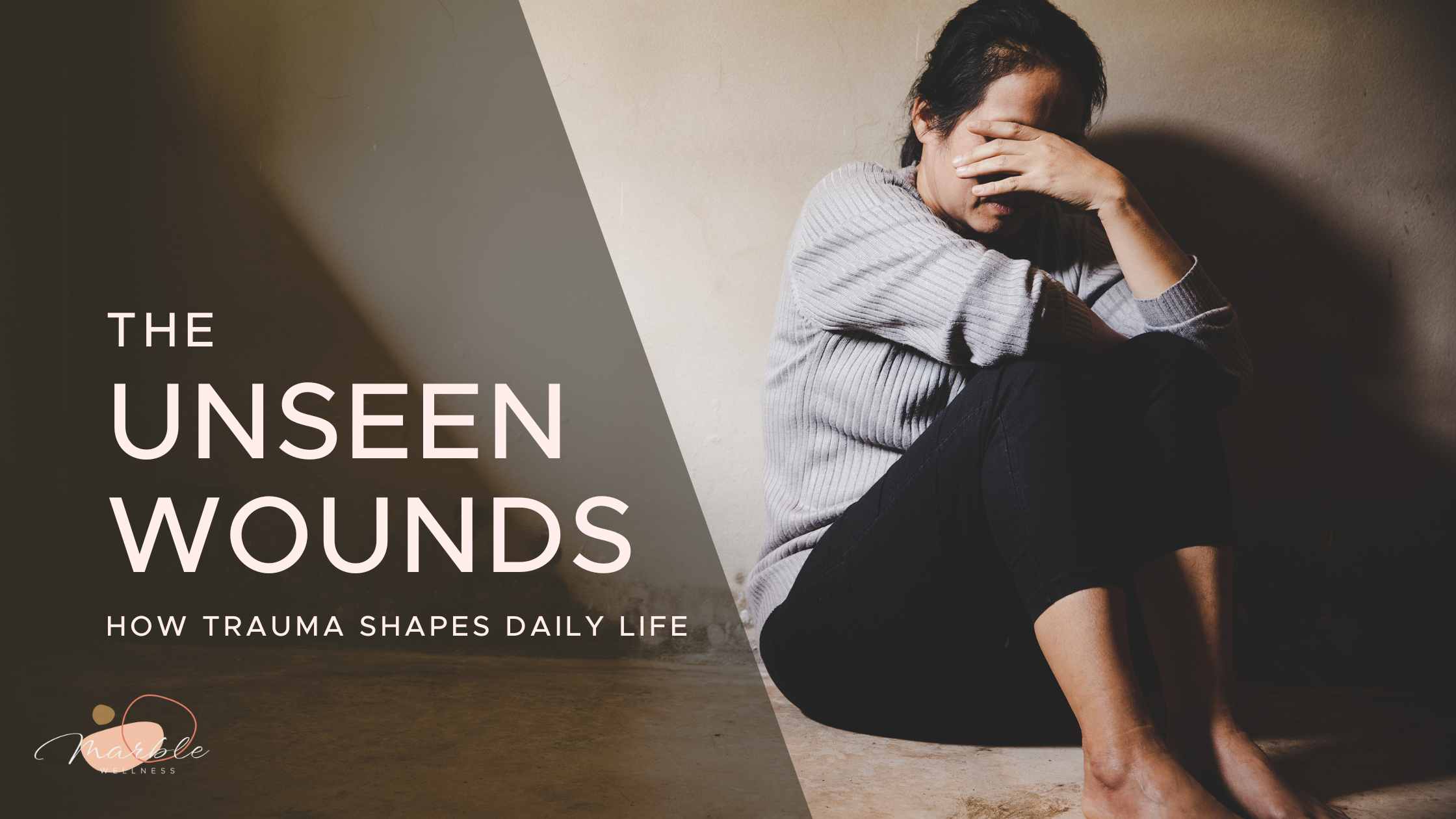
If you generally avoid conflict — but something about the phrase “conflict avoidant” doesn’t quite fit — that’s worth paying attention to.
If you’re someone who shuts down during relational friction, can’t bring yourself to say anything, finds your mind going blank, and then needs a few days just to feel like yourself again — that’s worth paying attention to too.
You’re not holding a grudge. You’re not trying to punish your partner, your friend, your boss, or your coworker. Your defense mechanisms have activated. Your brain is flooded. And your adult self is so far offline, it’s like the internet hasn’t been invented yet.
“Conflict avoidance,” “the silent treatment,” and “grudge holder” are often wildly inaccurate diagnoses — and they completely miss the mark on what’s actually happening. For many adults who struggle to move forward from conflict or tension, what’s underneath is fear, mistrust (of others and of themselves), isolation, and deep sadness. And underneath all of that? A core injury. One that started a long time ago — when you were three, or five, or eight years old.
When the adults in the room couldn’t show up
Imagine growing up in a home where one of your primary caregivers struggled with explosive anger. Or significant depression. Or a substance use problem. Perhaps even their own untreated mental health condition.
In those environments, something very important happened — something you didn’t choose and couldn’t name at the time: you learned that it wasn’t safe to have needs. You learned that expressing hurt, fear, or longing was either futile or dangerous. You learned that adults couldn’t be trusted to help you. And you learned — because children are extraordinarily adaptive — that the safest thing to do was to go quiet. Stay small. Don’t make waves.
But here’s the painful reality of being a child: you couldn’t meet your own needs either. You were three. Or five. Or eight. You didn’t have the emotional capacity or the life skills to regulate your own pain. So instead of processing it, you learned to ignore it. Compartmentalize it. Lock it in a box and keep moving.
You weren’t broken. You were surviving. And the strategies you developed in childhood were exactly right for the environment you were in.
The childhood wound that travels with you
The problem is that those strategies don’t retire. They don’t notice when the environment changes. They don’t get the memo that you’re now an adult, in a safer situation, with an adult brain capable of so much more.
When relational friction occurs today — a disagreement with your partner, tension with a friend, a difficult conversation at work — your nervous system recognizes the shape of it. It feels, even faintly, like those old moments. And before your conscious mind can intervene, the defense mechanisms that kept you safe as a child come rushing forward to do their job again.
Shut down. Go quiet. Wait it out. Don’t let anyone see.
These defenses have been strengthened over decades. They are fast, automatic, and powerful. And even though they may be strategies that made sense at age six — but look like “stonewalling” or “withdrawing” at age thirty-six — they are doing exactly what they were built to do: protect you.
You want to do better. Why is it so hard?
This is one of the most important things to understand — and one of the most compassionate reframes available to you.
You can genuinely want to show up differently. You can read the books, learn the frameworks, know intellectually that healthy communication involves staying present, expressing your feelings, and working toward repair. And then the moment conflict happens, none of it is available to you.
That’s not failure. That’s a wound being activated. Your adult self goes offline. The child self — the one who learned that the only safety was silence — takes over. And no amount of willpower or good intentions can override a nervous system that is running a much older, much deeper program.
This is why conflict resolution skills alone often don’t work. You can’t learn your way out of a wound. You have to heal it.
The path forward
Healing the wound — not just managing it — is the work. And it happens in layers.
It starts with recognition: understanding that what you’re experiencing isn’t a character flaw, but an adaptive response to real early experiences. That alone can be profoundly relieving.
Some of the work you can do on your own. Journaling, self-help books, honest self-reflection, and conversations with trusted people can all offer real progress. Don’t underestimate what sincere self-inquiry can do.
But therapy is likely where the deepest healing happens — and not just because a therapist can help you trace the threads from your present patterns back to their origins, or help you see the whole map rather than individual roads. It’s because a therapist can do something that books and podcasts simply cannot: they can bear witness to your hurt. In real time. In relationship.
They can see your wound — the fear, the shutdown, the pain — and not leave. They can show you, through the experience of the therapeutic relationship itself, that you are still safe, still belonging, still worthy of care, even while that hurt is visible. That experience of being truly seen and not abandoned is often the corrective emotional experience that begins to heal the original injury.
From that place — not after everything is fixed, but as the healing is happening — you can start to build the skills your adult self actually needs. The communication tools. The regulation strategies. The capacity to stay present during hard moments. Those skills can take root now, because the wound they were trying to grow in no longer needs to fight them off.
This is what we sometimes call re-parenting yourself. Learning to give yourself what your caregivers couldn’t. And learning, slowly, to trust — yourself, other people, and the possibility that conflict doesn’t have to mean abandonment.
If any of this sounds like you, you’re not broken. You adapted brilliantly to a hard environment. And you deserve real support in learning something new.
Marble Wellness — therapy for real, layered, human things.
Start Therapy in the St. Louis Area
If you live in the St. Louis metro area and are ready to improve your mental health, our expert St. Louis therapists are here to help. Not only do we have a team of therapists in Ballwin, MO, but we have also recently expanded to serve the Lake St. Louis and Wentzville area! Reach out to our Client Care Coordinator today to discuss your therapy options, both in-person and via online therapy in Missouri.
Contact Us!
Learn About Our Group Offerings

About Our St. Louis Area Therapists
The St. Louis area therapists at Marble Wellness are licensed mental health professionals serving clients in Ballwin, Lake St. Louis, and throughout the greater STL area, with online therapy in Missouri available across the state. Each member of our expert therapist team brings advanced training and extensive experience in areas like anxiety, depression, trauma, grief, life transitions, and relationship concerns.
When you reach out, you are matched with a therapist whose background, specialties, and style align with your goals so you can have both practical tools for right now and deeper insight for long-term change. To learn more about the therapists at Marble Wellness, visit our Meet Our Team page to read individual bios, specialties, and locations, and to take the next step toward the calmer, more fulfilling life you’ve been wanting.
Additional Counseling Services at Marble Wellness in St. Louis, MO
Marble Wellness Counseling services are designed to help set you on a path of living a more fulfilled, calm, and happy life. Our St. Louis area therapists have a variety of training backgrounds and areas of expertise. We have child and play therapists, therapists for teens, EMDR therapists, men’s mental health experts, couples therapists, and more! We specialize in anxiety, depression, grief, chronic illness, trauma & PTSD, life transitions, and maternal overwhelm. Our practice also specifically helps new moms with various postpartum concerns, moms in the thick of parenting, and moms with teens. We can also chat from wherever you are in the state with online therapy in Missouri. No matter where you are in your journey, we are here to help you thrive!